Menu engineering: how to analyze and improve your menu
Menu engineering is a way to evaluate dishes on your menu by their popularity and profitability. It helps you decide what to keep, promote, review, or remove using sales and cost data instead of relying on instinct alone. The key is to calculate costs consistently and review the results alongside the realities of your kitchen.
What is menu engineering in a restaurant?
Menu engineering is a way to analyze each dish using two criteria: how many customers order it and how much profit it contributes. The results give you a consistent basis for making menu decisions, rather than judging each dish only by its popularity or the margin it seems to generate.
In practice, the analysis starts with a list of dishes and comparable data: units sold, price, and the cost associated with each recipe. You then classify the dishes by popularity and profitability. The Seville School of Hospitality describes this approach as a way to analyze customer behavior using these two measures.
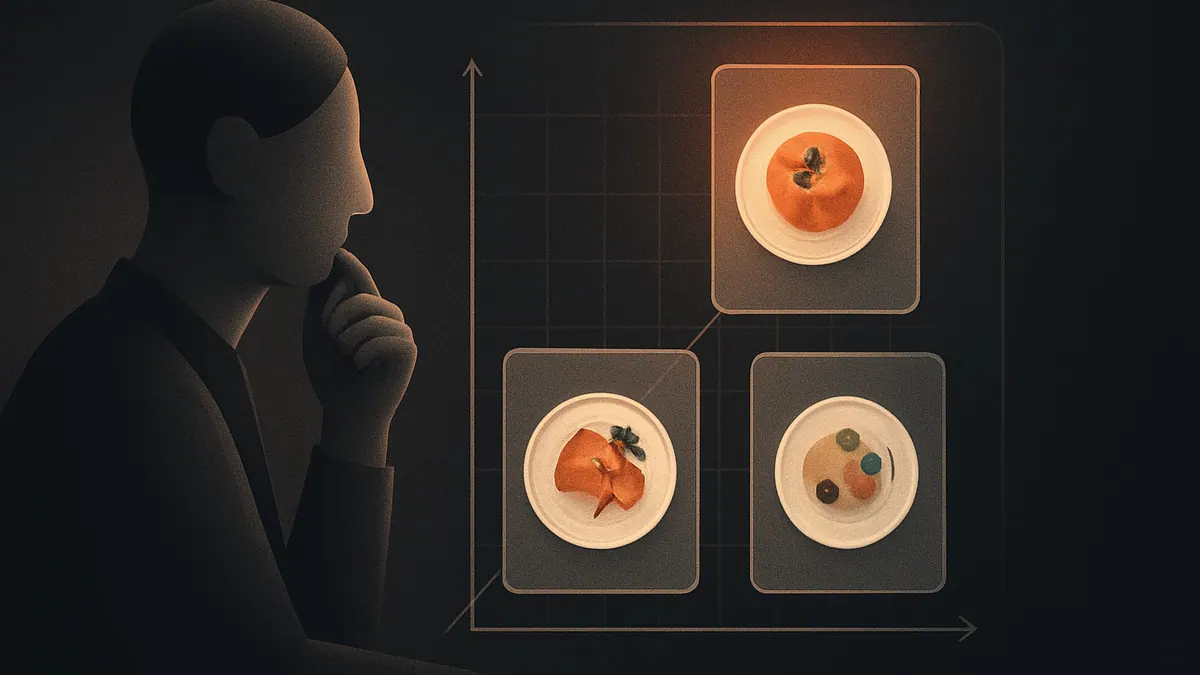
The matrix helps organize questions you may already ask yourself during day-to-day service: Why is this dish so popular? Does it contribute enough? Should it be more visible, or does it need changes? It does not replace your kitchen team’s judgment or the restaurant’s identity. Instead, it puts the data on the table so you can make decisions with more context.
How do you do menu engineering step by step?
To do menu engineering, gather sales and cost data for each dish, calculate profitability using a consistent measure, and compare each result with the rest of the menu. Then review the classifications with your team before changing prices, recipes, or presentation.
Start by choosing a period that reflects your restaurant’s usual activity. Check that the items sold and the costs you compare cover the same period. If you are analyzing a special season, promotion, or period when the menu changed, make a note of it: this may explain why a dish seems more or less popular than usual.
Next, rank dishes by units sold and estimate their profitability. Use the same method for every dish: mixing incomplete costs with more detailed costs can give you a misleading picture. A study on menu engineering recommends analyzing production costs, not just ingredient costs. It also warns that different methods can produce different results (study on production costs).
Finally, place the dishes in the matrix, interpret their positions, and decide what to test. You do not have to change the whole menu at once. Start with one focused action and see whether sales, costs, or customer response change.
What data do you need to analyze sales by dish?
To analyze sales by dish, you need to know at least how many units sell and how much each one contributes according to the profitability measure you have chosen. If your data is incomplete or recorded differently for different dishes, the comparisons will be less useful.
Popularity is usually measured by comparing the units sold for each dish with the total units sold in its category. Compare like with like: for example, starters with starters or desserts with desserts, rather than comparing dishes with different roles on the menu. The matrix described by ESH represents popularity as the percentage of units sold and profitability as total gross margin. It also uses bubble size to show sales.
For profitability, distinguish between the margin per unit and the combined contribution of all units sold. A dish may generate a useful contribution per serving but sell infrequently; another may have a tighter margin per unit but generate more total contribution because it sells often. To review a recipe’s cost before classifying it, see this guide on how to calculate cost per dish and per serving or use the recipe costing calculator.
Use the same cost method for every dish. Ingredient costs are useful, but they do not always capture everything you need to understand production costs. Be clear about what your calculations include and document any exceptions, such as a side served with a dish or a recipe whose actual yield differs from the expected yield.
How do you interpret the menu engineering matrix?
The menu engineering matrix groups dishes by popularity and profitability to help you decide whether to keep them as they are, give them more visibility, review their offer, or consider removing them. The specific interpretation depends on the calculation method and cut-off points you use.
In the best-known classification, stars have high popularity and high profitability, so they are usually worth keeping and protecting. Plowhorses have high popularity but lower profitability; it is worth understanding why they sell so well and checking whether you can improve their contribution without reducing their appeal. Puzzles sell less often but may offer attractive profitability per unit, so investigate whether the issue is their visibility, description, or fit with your customers. Dogs score low on both measures and may need a more thorough review.
These labels are guides, not instructions. A less profitable dish may be important to the restaurant’s identity, meet a customer need, or complement other orders. Conversely, a dish that performs well in the matrix could create kitchen difficulties that sales data do not show. ESH notes that dishes in the high-popularity, high-profitability area are the best candidates to keep with few changes, while those in the low area for both measures may be candidates for removal.
Keep in mind that not every matrix calculates profitability in the same way. ESH also presents an alternative with nine categories that uses profitability per unit, with the aim of avoiding the influence of units sold twice in the calculation. For that reason, state which method you are using before comparing results.
Which dishes should you keep, promote, or review?
Keep dishes that perform well in both sales and profitability, promote those with sales potential, and review dishes whose weak results may have a fixable explanation. Before removing a dish, consider its role in your offer and the effect that decision could have on the menu as a whole.
For a star, the priority is usually to avoid disrupting what already works: maintain the dish’s execution, availability, and consistency. You can give it more visibility on the menu, but there is no need to change the recipe or price unnecessarily just because it is classified as a star.
If a plowhorse is very popular but contributes less than expected, review the recipe costing, portion size, and price. Before making changes, consider how customers may perceive them. A small cost improvement may be more appropriate than a price increase, but the right choice depends on your ingredients, concept, and market.
For a puzzle, try improving its description or position on the menu and see whether demand changes. Also check that your team recommends it when it fits what a customer is looking for. For a dog, ask whether there is an operational or commercial reason to keep it; if not, consider changing it or removing it.
Record each change you make and review the results afterward. If you change several things at once, it will be hard to tell which one had an effect. Keeping your QR menu up to date can make it easier to review your offer, but the analysis still depends on consistent sales and cost data.
How can you improve menu profitability without losing your identity?
You can improve menu profitability by reviewing costs, recipes, prices, and presentation, but each change should respect your restaurant’s concept and the experience customers expect. Menu engineering helps you prioritize what to investigate; it does not automatically make a dish a problem or a success.
Start by checking the actual cost of your recipes and the consistency of your portions. Look for ingredients that go to waste, preparations that create unnecessary work, or items that could be used more effectively. The guide to controlling restaurant waste can help you spot losses that are not obvious when you look only at ingredient purchase prices.
Then consider small, measurable changes: adjust a side, rewrite a description to explain the dish more clearly, change its position on the menu, or review its price. Each option can affect sales, costs, and customer perception differently. Do not assume that more visibility will always increase profitability: if a dish has a high cost or the kitchen cannot keep up with demand, the improvement may fall short.
Menu engineering is also more useful when repeated. Compare results with the previous analysis, note what changed, and update costs when recipes or ingredients change. At Tablezio, analysis can sit alongside the restaurant’s day-to-day operations; what matters is that menu decisions are based on reviewed information and the team’s experience.
Frequently asked questions
How often should you do menu engineering?
Review it as often as you can manage consistently, and whenever the menu, recipes, or costs change significantly. Regularity matters more than repeating the analysis without checking whether the data is comparable.
What is the difference between profitability per dish and total profitability?
Profitability per dish considers what one unit contributes; total profitability reflects the combined contribution from the units sold. A dish may perform well on one measure but not the other, so define which one you are using before classifying dishes.
Do I have to remove dog dishes?
Not necessarily. The matrix flags them for review, but before removing them, consider their role on the menu, their importance to certain customers, and any kitchen challenges that could explain their results.
Does menu engineering work for a small menu?
Yes. It can help you organize your dishes and identify what deserves attention, although a small menu may take less time to analyze. Use consistent cost criteria and comparable sales periods.
Does the matrix automatically tell me what price to set?
No. It helps identify dishes worth reviewing, but it does not determine the right price. To decide, consider cost, customer response, the restaurant’s positioning, and whether the recipe is practical to produce.
Try Tablezio in your business
Sources
This article was produced with the help of artificial intelligence. Its specific facts were checked against the sources listed at the end and reviewed automatically.